
Higher education systems · Search visibility · AI integration and automation

We modernize information systems, improve digital accessibility, and build technical systems with evidence behind them.

A San Francisco Bay Area studio with a higher-education focus: accessible websites and platform modernization, PDF-first document remediation, and legacy-data preservation and migration.

See the work directly: review the SRJC course-outline archive, inspect an independent UC Berkeley accessibility demonstration, or try a live AI assistant.

Straight answers

Know the terms before you call, not after.

Scope, price, responsibilities, and deliverables are agreed before work begins. You know who is doing the work, how success will be checked, and what your team will own at handoff.

Working with us

What to expect

Technical work is easier to trust when the scope is clear, the evidence is visible, and you know who is responsible for the result.

You work with the people doing the work

The people on the call are accountable for implementation. Any specialist review or escalation is identified before it becomes part of the plan.

We document the handoff

You receive operating notes, ownership details, and training when the project needs it. If your team cannot run what it owns without us, the handoff is not finished.

We say where AI is not worth it

Some work benefits from AI and some does not. We explain which is which before you spend money building the wrong thing.

Recent work

Work you can inspect

Higher-education work comes first here: a verified course-record archive and a working document-accessibility system. Every case study states what is public, what is private, and what evidence is available.

SRJC Course Outline Archive data table screenshot

Data engineer

Screenshot case study

SRJC Course Outline Archive — Read the case study

Preserved 23,760 course-version records and 23,760 source PDFs outside a legacy portal.

Santa Rosa Junior College course-outline records lived in a legacy ASP.NET WebForms portal with no application programming interface or bulk export. We built a custom extraction and normalization pipeline, reconciled 23,760 course-version records, and preserved the corresponding 23,760 source PDFs in a structured archive prepared for research, preservation, and migration planning.

  • Legacy-system extraction
  • Data normalization
  • Record reconciliation
  • PDF archive
ADA Document Remediation Engine case study cover

AI Engineer

Private system, no public URL

ADA Document Remediation Engine — Read the case study

A multi-critic document remediation engine in Python, with audit-logged quality-assurance loops.

A working Python pipeline that ingests structured PDF input plus embedded media, classifies each document to a DocumentProfile, and runs text, table, and structure critics in parallel to evaluate AI-assisted remediation. An audit logger records differences between quality-assurance loops so model decisions can be inspected.

  • Python
  • AI document remediation
  • Multi-critic eval
  • Audit logging
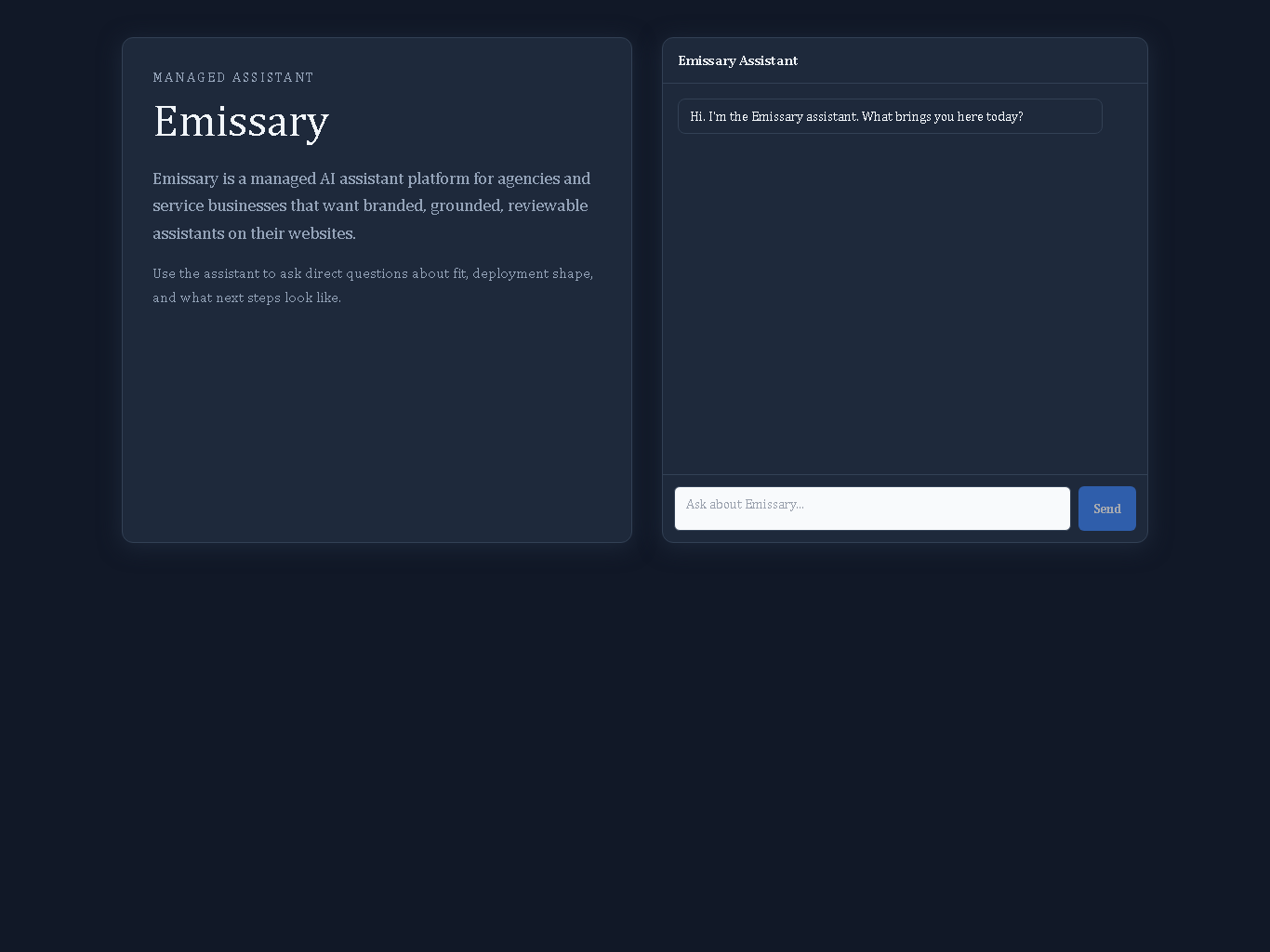
Emissary AI intake assistant interface screenshot

Full-stack AI Engineer

Live, open it yourself

Emissary — Read the case study

Our flagship AI intake assistant. Use it yourself on a demo business.

Sonoma Solutions' flagship AI intake assistant. There is a working demo you can use: it runs a fictional Sonoma County HVAC company, answers questions from that company's knowledge base, collects the details a real job would need, refuses anything outside its rules, and hands back the summary the business would receive. The assistant at emissary.sonomasolutions.io answers questions about Emissary itself instead. Astro 4, React, and TypeScript on the frontend; Node and TypeScript backend modules for database access, a knowledge base, intake email parsing, lead routing, and downstream email integration. It is the productized version of the AI intake systems we build for clients.

  • Astro 4
  • React
  • TypeScript
  • Node.js

Explore our higher-education services, the complete case-study library, and public GitHub repositories for anyone who wants to inspect the code.

How it works

From first call to handoff

1

We define the problem

A 20-minute conversation about what is happening, what is getting in the way, and whether we are a fit. No pitch.

2

We scope the work

The few actions worth doing first, with responsibilities, deliverables, evidence, and price.

3

We build and verify

You see progress as it comes together. Testing and review are part of the work, not a final surprise.

4

We hand it over

You receive operating notes, ownership details, and training when the project needs it.

Common questions

Tell us what is getting in the way

Describe the problem. Within one business day, we will tell you whether we can help and what we would investigate first. The initial 20-minute call is free.